Canada losing track of salmon health as industrial pressures grow
New research shows that Canada is steadily losing its ability to monitor the health of wild Pacific salmon at a time when development pressures on salmon watersheds are increasing.
A study published in the Canadian Journal of Fisheries and Aquatic Sciences finds that monitoring of salmon spawning populations has declined by roughly one-third since the adoption of Canada’s Wild Salmon Policy, leaving nearly half of Pacific salmon populations without enough data to assess their status.
Spawning-stream surveys are a cornerstone of salmon conservation, providing the information needed to track population trends, assess risk, and guide fisheries and recovery decisions. As these surveys decline, so does the ability to detect early warning signs of population collapse—particularly important as industrial projects, infrastructure, and
cumulative land-use pressures expand in salmon-bearing watersheds.
The study is accompanied by a Letter published in Science that places these monitoring losses in the context of recent federal decisions to accelerate industrial approvals while reducing environmental oversight.
Together, the papers highlight the growing risks of managing salmon—and approving large-scale development—without reliable baseline ecological information.
“Monitoring is how we understand what’s happening to salmon on the ground,” says Dr. Michael Price, Director of Science at SkeenaWild Conservation Trust and adjunct professor in SFU’s Department of Biological Sciences. “When monitoring declines at the same time development pressures increase, decisions are increasingly made with an incomplete picture of what is at risk.”
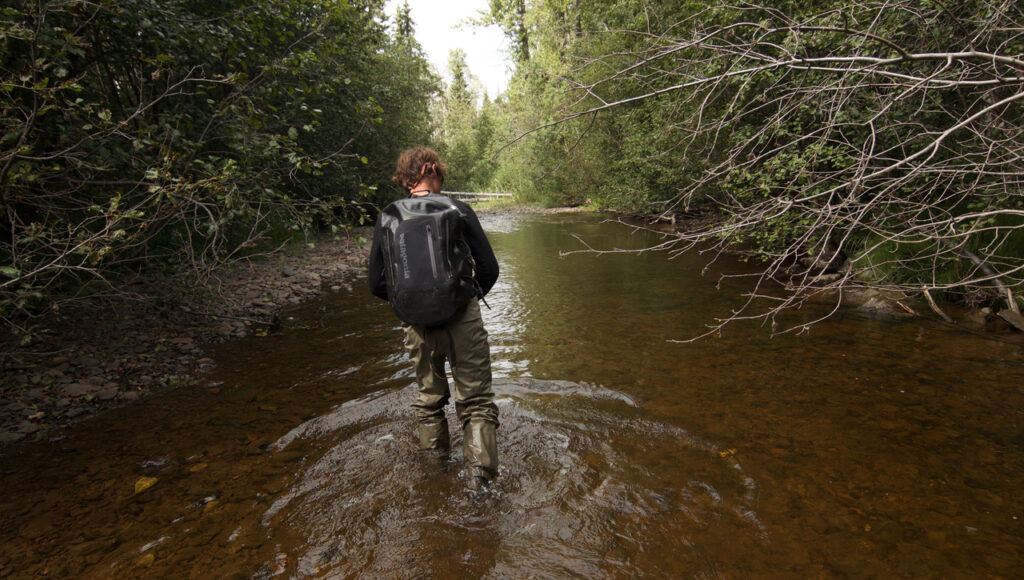
Canada’s Wild Salmon Policy relies on population-level information to detect declines, guide fisheries decisions, and trigger recovery actions when needed. Our research evaluated whether the monitoring system intended to support these goals is still capable of doing so, with a particular focus on the breadth, consistency, and representativeness of salmon spawning surveys across western Canada.
Our analysis shows that monitoring coverage has become increasingly uneven, with many populations now counted infrequently or not at all. Because salmon populations within the same region often respond differently to environmental and human pressures, gaps in monitoring limit our ability to understand how risks are distributed across watersheds. This creates blind spots where declines may go undetected, even when nearby populations appear stable.
These findings are especially relevant as pressures on salmon habitat intensify in the Skeena and beyond. Climate change, cumulative land use, and accelerating development all increase uncertainty and risk for salmon-bearing watersheds. The accompanying Science Letter highlights that decisions about large-scale development are increasingly being made in contexts where baseline ecological information is incomplete. Together, our work underscores the need for renewed investment in broad, population-level monitoring to support effective conservation, responsible development, and long-term resilience of salmon ecosystems.
Salmon monitoring matters
Follow us on social media to get the latest information.


Other News
-
Pacific Marine Conservation Caucus welcomes renewed federal investment in Pacific Salmon, calls for concrete actions to recover salmon populationsPacific
Pacific Marine Conservation Caucus welcomes renewed federal investment in Pacific Salmon, calls for concrete actions to recover salmon populations FOR IMMEDIATE RELEASE April 01, 2026…
-

Pacific Salmon Treaty: conserving salmon while the margins shrink
Pacific Salmon Treaty: conserving salmon while the margins shrink A shorter version of this article by SkeenaWild Assistant Director Nathan Meakes appeared in the February…
-
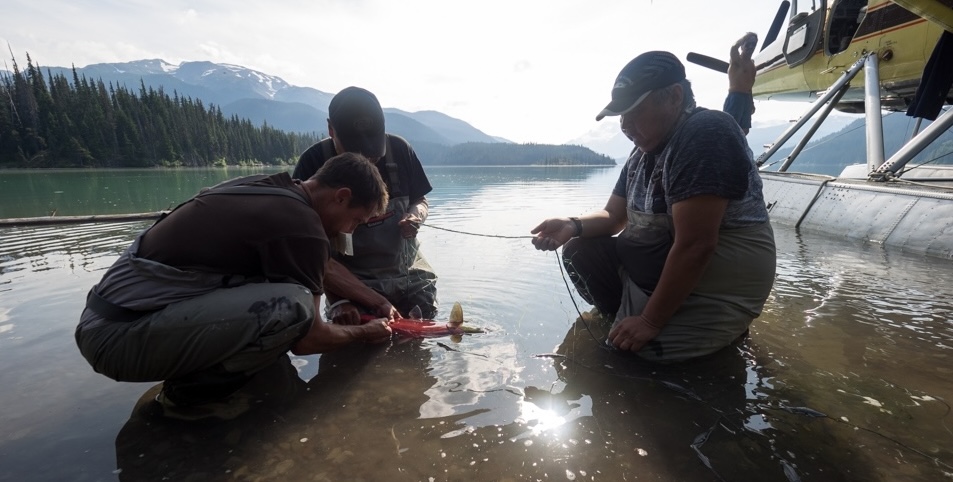
Canada losing track of salmon health as industrial pressures grow
Canada losing track of salmon health as industrial pressures grow New research shows that Canada is steadily losing its ability to monitor the health of…
-

2025: Our year in Review
2025 Annual Report 2025: What We Achieved Together And what’s in store for 2026. Your support makes it all happen. Together, we’re building a sustainable…
-
Pacific Marine Conservation Caucus welcomes renewed federal investment in Pacific Salmon, calls for concrete actions to recover salmon populationsPacific
Pacific Marine Conservation Caucus welcomes renewed federal investment in Pacific Salmon, calls for concrete actions to recover salmon populations FOR IMMEDIATE RELEASE April 01, 2026…
-
Pacific Salmon Treaty: conserving salmon while the margins shrink
Pacific Salmon Treaty: conserving salmon while the margins shrink A shorter version of this article by SkeenaWild Assistant Director Nathan Meakes appeared in the February…
-
Canada losing track of salmon health as industrial pressures grow
Canada losing track of salmon health as industrial pressures grow New research shows that Canada is steadily losing its ability to monitor the health of…
-
2025: Our year in Review
2025 Annual Report 2025: What We Achieved Together And what’s in store for 2026. Your support makes it all happen. Together, we’re building a sustainable…